
Rule of thumb: if your garage door has run smoothly all through hurricane season, a lubrication pass and a visual once-over is all it needs before winter. The exceptions are doors that took on moisture damage, spent the season with gaps in the weatherstripping, or haven't had the hardware checked since spring. Clay County winters aren't brutal, but the swing from hot, humid air to cooler, drier nights puts real stress on a garage door system that just spent months absorbing rain and humidity.
Why Florida's "Winter" Still Matters for Your Garage Door
You're not dealing with snow loads or frozen tracks here, but you are dealing with the aftermath of a long stretch of heat, humidity, and afternoon downpours. Wood and composite panels that swelled during the wet season can start to shrink and crack as the air dries out in the cooler months. Metal hardware that sat in salt air or damp air for weeks is more prone to rust once temperatures drop and condensation forms on cool mornings. None of this is dramatic on its own, but ignored together, it adds up to a door that binds, sticks, or wears out its springs and cables faster than it should.
Inspect for Storm and Moisture Damage
Before you do anything else, walk the door top to bottom and look for what hurricane season left behind:
- Rust spots on hinges, rollers, tracks, and the bottom bracket, especially if you're closer to the coast where salt air accelerates corrosion.
- Swollen or warped panels, particularly on wood or wood-composite doors that took on rain.
- Cracked or brittle weatherstripping along the bottom seal and sides, which lets in drafts, water, and small pests once it fails.
- Loose or vibrating hardware, since high winds and storm pressure can work bolts and brackets loose over a season without you noticing.
Catching these now, while the weather is milder, is easier than dealing with a stuck or off-track door in the middle of a cold snap.
Lubricate the Moving Parts
Humidity breaks down lubricant faster than you'd think, so even a door that was serviced in spring may be due for fresh grease by late fall. Use a silicone-based or garage-door-specific lubricant (not WD-40, which is a cleaner, not a lubricant) on:
- Rollers and hinges
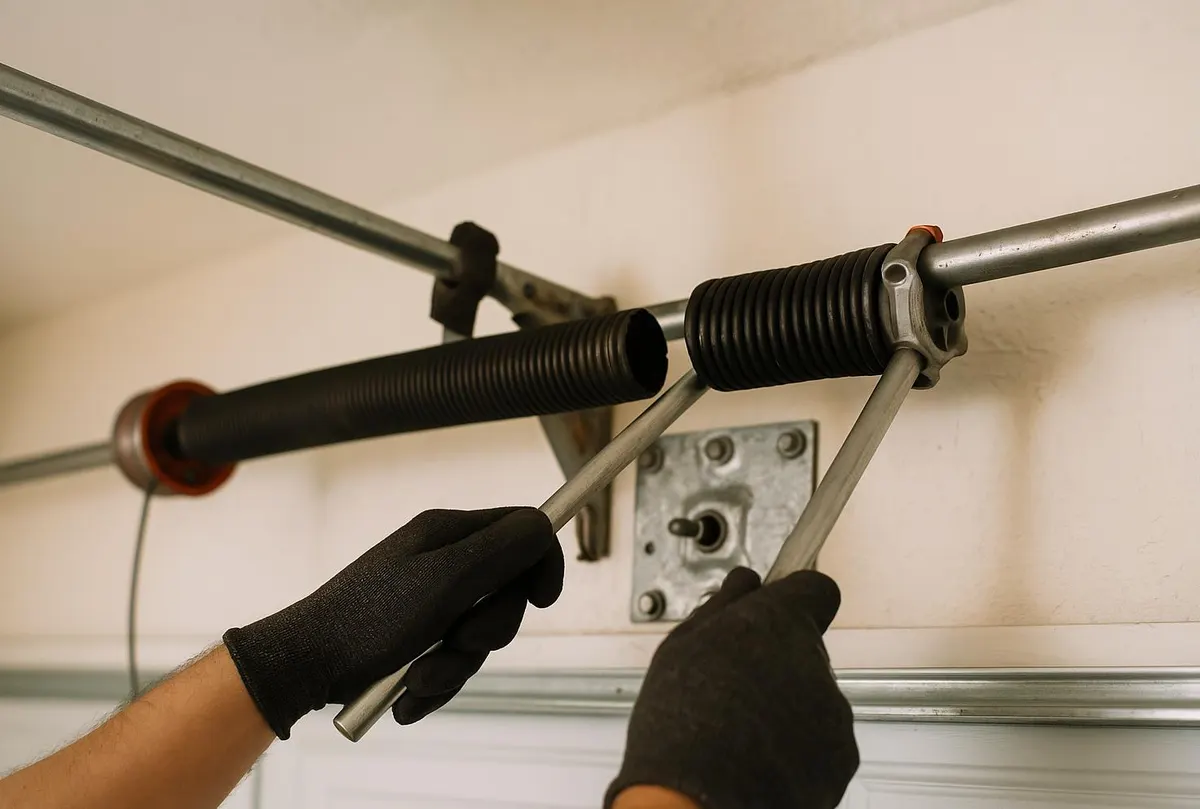
- The torsion spring (a light coat, not a soak)
- Track contact points
- The opener's chain or screw drive, if accessible
This single step prevents a lot of the grinding and popping noises that show up as temperatures cool and metal contracts slightly.
Check the Seals and Weatherstripping
Cooler, drier air in Clay County's winter months means less humidity buildup inside the garage, which is good, but it also means any gaps in your door's seal let outside air, dust, and the occasional palmetto bug in more freely than during the wet season. Run your hand along the bottom seal and side weatherstripping. If it's cracked, flattened, or pulling away from the track, replace it now. It's inexpensive and it's your main defense against both drafts and wind-driven rain during the odd winter storm system that still rolls through.
Test the Balance and Listen for Changes
Disconnect the opener (pull the release cord) and lift the door halfway by hand. It should stay roughly in place. If it drops or shoots up, the springs have shifted out of balance, something that can happen gradually after months of heat expansion and humidity swelling followed by cooler contraction. An unbalanced door puts extra strain on the opener and cables, which shortens their lifespan. This isn't a DIY spring adjustment job; the tension involved makes it dangerous without the right tools.
Tighten Hardware and Recheck the Tracks
Go around with a socket wrench and snug up the bolts on the track brackets, hinges, and the header bracket above the door. Storm pressure and regular daily cycling loosen these over a season. While you're at it, sight down each track to check it's still straight and parallel, since a track bumped out of alignment during a storm or by a car backing out too close is a common cause of doors that start running rough or jumping the track.
Plan for Heavier Garage Use
Between holiday guests, extra vehicles, and decorations going in and out of storage, your garage door and opener will likely see more daily cycles over the next couple of months than usual. Check that the opener's safety reverse sensors are clean and properly aligned (a quick wave-your-hand test under the door will tell you), and make sure the remote and keypad batteries are fresh so you're not stuck fumbling with a dead opener when you've got a car full of guests waiting.
When to Call Middleburg Overhead Door Co
If your inspection turns up rust that's spread past the surface, a door that doesn't hold its position during the balance test, or seals that need full replacement rather than a quick patch, it's worth bringing in a technician rather than guessing. Our Garage Door Tune-Up & Maintenance service covers exactly this kind of seasonal check: spring tension, hardware, lubrication, and track alignment, all addressed in one visit. If hurricane season left you with a door that's sticking, grinding, or visibly off its track, our Off Track Door Repair service gets it running straight and safely again before winter guests start arriving.
If you're in Middleburg, Orange Park, Fleming Island, Green Cove Springs, Oakleaf, Doctors Inlet, Keystone Heights, or Penney Farms and want your garage door squared away before the season's heavier use kicks in, give Middleburg Overhead Door Co a call. We'll get it checked, adjusted, and ready to handle whatever the rest of the Clay County winter brings.