
The Argument Usually Starts With "It's Just a Garage"
The first move in this fight is almost always the same: someone says, "The garage doesn't have AC, so it can't be making our electric bill go up." It sounds reasonable. The garage isn't a bedroom. Nobody's running the thermostat out there. Why would it matter?
Here's why that logic falls apart in an attached garage, especially in a place like Clay County where the garage shares at least one wall (and often a ceiling) with conditioned living space: heat doesn't care whether a room is "supposed" to be cooled. If the garage turns into a 110-degree box every afternoon, that heat pushes through the shared wall, the door between the garage and the house, and sometimes straight through ductwork or an AC unit that's actually sitting inside the garage itself. Your air conditioner then has to work harder to fight heat that's leaking in from a space you never intended to cool in the first place.
Why Attached Garages Turn Into Ovens Here
Florida summers and shoulder seasons like this one are rough on garages specifically because of three things: heat, humidity, and sun exposure on a big metal or wood surface. A standard garage door has far less insulation than an exterior wall, and if it's older or uninsulated, it acts almost like a giant heat collector. Add in:
- Afternoon downpours that push humid air through any gap in the weatherstripping
- Panels that have swelled or warped slightly from months of moisture exposure
- Worn-out seals at the bottom and sides that no longer sit flush
- Hardware that's rusted or loosened, letting the door sag just enough to break the seal
and you get a garage that's noticeably hotter and more humid than the air outside — then that heat migrates inward.
The Real Symptoms to Check Before You Keep Arguing
Instead of guessing, go look at the actual door. These are the tells:
- Daylight visible around the edges when the door is closed — even a pencil-width gap along the bottom or sides lets conditioned air leak and hot air in.
- Weatherstripping that's cracked, flattened, or peeling away from the door's bottom edge or side tracks. Rubber seals degrade faster in heat and UV exposure.
- Panels that look slightly bowed or don't sit flat against the frame, often from humidity swelling the material over time.
- A door that doesn't close level — one side touches the floor before the other, which usually means the door is off track or the springs are unevenly tensioned, both of which affect how well it seals.
- Rust around hinges, tracks, or the bottom bracket, especially if you're closer to the coast where salt air accelerates corrosion and loosens hardware faster than inland homes.
If you check off two or three of these, the gaps aren't cosmetic — they're a steady, ongoing air leak into a space that's already running hot.
What Actually Fixes It (and What Doesn't)
Spraying a fan into the garage or cracking the house door to "let heat escape" doesn't address the real leak — it just moves hot, humid air closer to your living space. What actually helps:
- Replace worn weatherstripping along the bottom and sides. This is inexpensive and often the single biggest improvement for a door that's otherwise in decent shape.
- Realign a door that's off track so it closes flush and evenly instead of leaving a gap on one side.
- Address panel warping if the door no longer sits flat — sometimes this means panel replacement rather than just new seals.
- Check that the door still meets wind-load requirements if it's older; doors built to current wind-load standards also tend to seal tighter against the frame, which helps on both the storm-protection side and the energy-efficiency side.
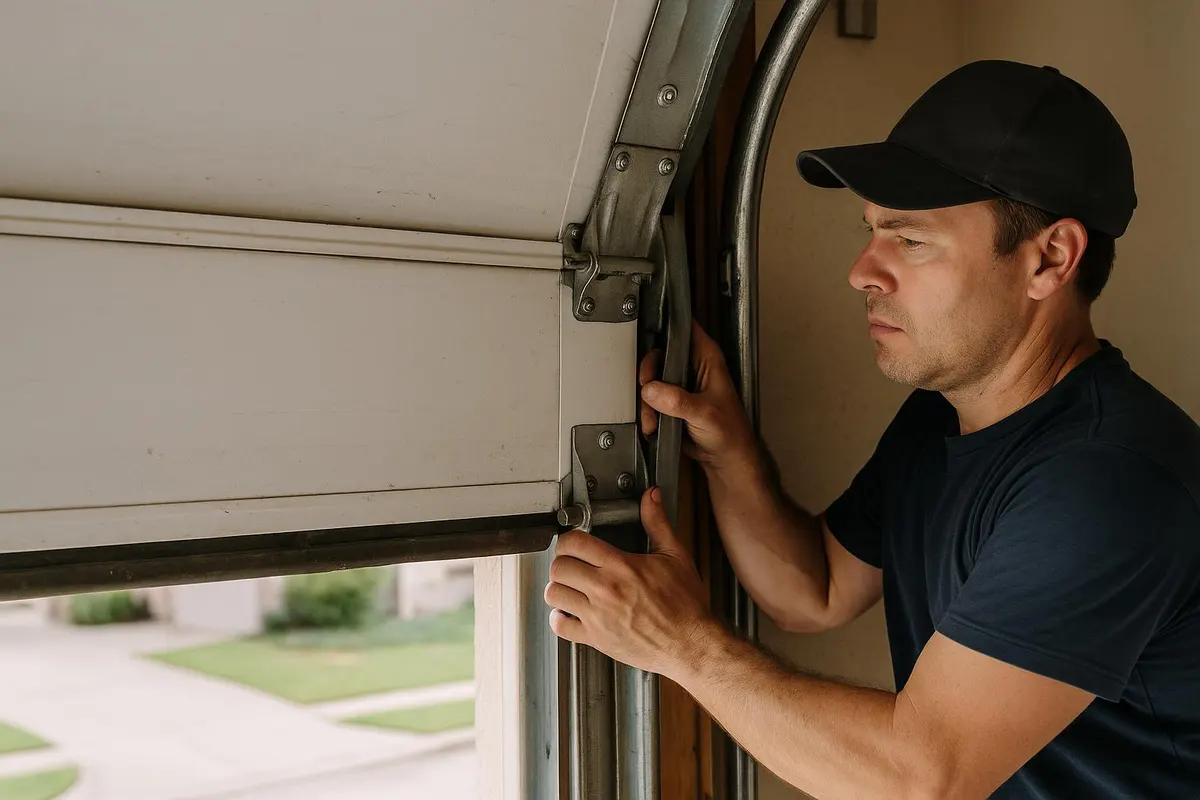
- Get the hardware serviced — loose rollers, rusted hinges, and worn springs all affect how evenly the door closes, which directly affects how well it seals.
None of this requires tearing out drywall or redoing insulation in the attic. Most of the leak is happening right at the door itself, which is good news because it's a relatively quick fix compared to sealing an entire structure.
When to Call Middleburg Overhead Door Co
If your garage door has visible gaps, doesn't close flush, or you've noticed rust and sagging after a season of storms, that's worth a professional look before it turns into a bigger energy drain — or a bigger repair. Middleburg Overhead Door Co can run a Garage Door Tune-Up & Maintenance visit to check alignment, hardware, and seals all at once, and if the panels themselves are warped or damaged, Garage Door Panel Replacement can solve the problem at the source instead of patching it year after year.
If you're in Middleburg, Orange Park, Fleming Island, Green Cove Springs, Oakleaf, Doctors Inlet, Keystone Heights, or Penney Farms and you're ready to settle the argument for good, call Middleburg Overhead Door Co to get your garage door checked out.