
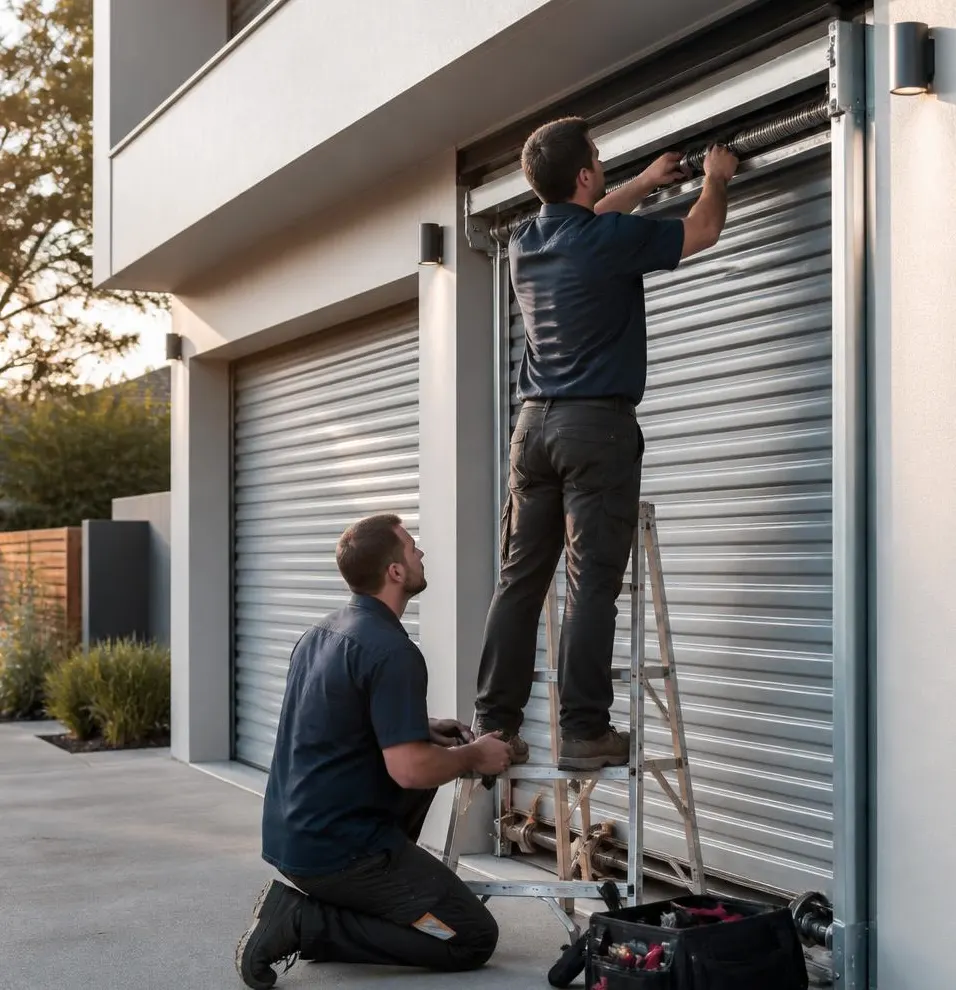
Grinding usually means metal is wearing against metal in the rollers or bearings. Squealing points to a dry hinge or roller that needs lubrication. Popping or banging is often a spring losing tension or a panel flexing under pressure. Rattling almost always traces back to loose hardware somewhere along the track or opener. Here's how to tell the difference and what actually fixes each one.
Grinding: a harsh, metal-on-metal sound as the door moves
Grinding tends to show up at a specific point in the door's travel and often comes with jerky, uneven movement rather than a smooth glide. It's a wear symptom, not a one-time fluke, so it gets worse if ignored.
- Rollers: the first thing a technician checks. Steel rollers wear down over time, and in our humidity and salt-tinged air, they rust faster than they would inland. Rusted or flat-spotted rollers get replaced, usually with nylon rollers that run quieter and hold up better to moisture.
- Bearings: next on the list. Worn bearings inside the rollers, or at the ends of the torsion spring shaft, create a gritty grinding feel even when the rollers themselves look fine. The fix is a bearing or roller-assembly swap.
- Track alignment: a bent or slightly separated track will grind against the edge of the roller. This gets realigned, or replaced if it's bent beyond adjustment.
- Opener gear: if the grinding comes from the motor unit itself rather than the door, a stripped drive gear inside a chain or belt opener is usually the cause. That means a gear kit replacement or, if the opener is old, a full replacement.
Squealing: a high-pitched sound through most of the cycle
Squealing is almost always friction-related and tends to be consistent every time the door opens or closes, rather than isolated to one spot.
- Lack of lubrication: the most common cause, checked first. Dry hinges, rollers, and spring coils squeal as metal parts rub without a buffer. The fix is cleaning off old grease and grime and applying a silicone- or lithium-based garage door lubricant, not WD-40, which attracts dust instead of protecting the metal.
- Worn hinges: moisture and humidity can pit and roughen hinge pivot points over time, and a rough hinge squeals even after lubrication. These get replaced.
- Spring coil friction: torsion spring coils rubbing against each other without proper lubrication produce a metallic squeal during lifting. Lubricating the spring and checking the winding usually resolves it.
- Belt-drive opener slip: if the squeal comes from the opener itself, a belt that's lost tension can slip and squeal. This gets adjusted or replaced.
Popping or banging: a sudden, loud sound
Popping is more startling than the other noises and often happens once, rather than continuously, though it can repeat on every cycle if the underlying cause isn't fixed.
- Spring tension: checked first because it's the most serious. A torsion spring losing tension, or a cable slipping off its drum, can produce a loud pop and is dangerous to handle without training, since the spring is under heavy load. This is spring replacement territory, done by a technician with proper winding bars.
- Panel flexing: on older steel doors, humidity swelling or minor warping can cause a panel to flex and pop as it opens or closes. Replacing the affected panel resolves it without needing a whole new door.
- Track bracket separation: wind-load stress from storm season can loosen the brackets holding the track to the frame, letting the track flex and snap back with a bang. The fix is re-securing brackets and confirming hardware meets wind-rated standards for our area.
- Obstructions: debris lodged in the track can cause a pop when the door forces past it. A quick track clean-out is all that's needed.
Rattling: an ongoing, loose-sounding noise
Rattling usually runs through the entire door cycle and feels like something is loose, because something usually is.
- Loose hardware: bolts and screws on hinges, brackets, and track loosen from vibration over months of regular use. Tightening everything, and replacing any stripped fasteners, is the first step.
- Chain-drive tension: a chain-drive opener with a loose chain will rattle against the rail. Adjusting chain tension usually solves it.
- Loose panels: fasteners holding panels together can shake loose, especially after a season of storm vibration. These get resecured or the panel is replaced if it's damaged.
- Worn end bearing plates: the plates at the top of the torsion spring can vibrate against their mounting bracket as they wear. Replacing the bearing plate assembly quiets this down.
When to call Middleburg Overhead Door Co
If lubrication doesn't quiet a squeal within a day or two, if you hear grinding that's getting worse, or if you hear a pop followed by the door feeling heavier or uneven, it's time to call. Spring-related noise in particular isn't a DIY fix, the tension involved can cause injury. Our Garage Door Spring Repair service handles tension and cable issues safely, and our Garage Door Tune-Up & Maintenance visit covers lubrication, hardware tightening, roller and track inspection, and bracket checks in one pass, which is especially useful heading out of hurricane season when wind-load stress has had all summer to work hardware loose.
If your door in Middleburg, Orange Park, Fleming Island, Green Cove Springs, Oakleaf, Doctors Inlet, Keystone Heights, or Penney Farms is making a noise that doesn't match normal operation, give Middleburg Overhead Door Co a call and we'll track down the cause before it becomes a bigger repair.